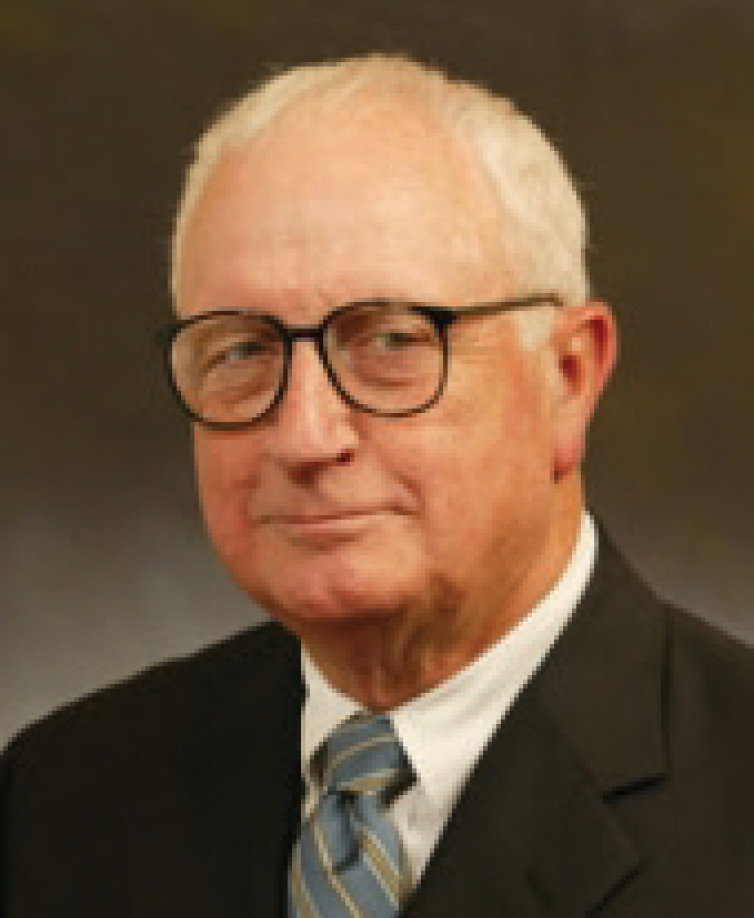
Delaware lost a legal giant with the passing of Grover Brown on July 1, 2024.
I have known Grover since 1985 when he joined Morris James after leaving the bench as Chancellor. I did not have the privilege of appearing before him in that capacity. Nonetheless, his confidence in the litigation partners at Morris James—Henry Herndon, Ed McNally and Clark Collins—confirmed my own judgment as an associate that I was working with knowledgeable practitioners who, like Grover, cared about the rule of law and in particular the common law he helped shape in the Court of Chancery.
I recall early on having read one of Grover’s reported decisions that exemplified his approach, In the Matter of the Last Will and Testament of Alice Langmeier, Deceased, 466 A.2d 386 (Del. Ch. 1983). The case involved a challenge to a will prepared by an elderly woman who, three months before she died, had changed her will to leave virtually all of her one million dollar estate to her housekeeper of four months. At issue were her testamentary capacity and whether the housekeeper had exercised undue influence. Several things were noteworthy. First, the clarity of the prose. Grover was exact in describing the testimony of each of the witnesses and in identifying discrepancies between and among the witnesses.
Second was his obvious sympathy for the humanity of each of the participants. While there was evidence that the housekeeper had orchestrated the will change for her own benefit, Grover nonetheless also recognized the value of the housekeeper to the elderly widow. He thus noted that:
“In her last days she had found a close friend who was willing to share her life on a round-the-clock basis. Who is to say that under such circumstances wealth and fortune cannot assume a secondary role to the comfort derived from knowing that in your last days there is someone who truly seems to care?” Id. at 398.
In the end he concluded that the decedent lacked testamentary capacity and that the new will was a product of undue influence. In denying the admission of the new will into probate following a nine-day trial, Grover went out of his way to praise the counsel who appeared before him:
"Finally, it would be an injustice not to compliment counsel on the manner in which this case was tried and presented. It was an exceedingly professional job on both sides. In Ethridge v. Bennett’s Executors, supra, also a will contest case, the trial judge commenced his charge to the jury with the following statement as found at 31 A. 814:
‘And I must say, gentlemen, that of all the cases which I have ever heard tried—and they have not been few—I have never heard one more ably tried, better tried, or in which the manner of counsel was more pleasant, not only towards each other, but towards the court, as in this case; and it has been a matter of great satisfaction and of great pleasure to the court. We say to you, gentlemen, that each of the counsel in the trial of this case has discharged his duty fully and clearly.’
That sentiment I echo in this matter."
Id. at 407.
This opinion exemplified his approach. One result was that the litigants and their counsel felt they were heard, a core function of the judicial process.
Grover’s legal acumen evoked enormous respect and deference from other lawyers once he left the bench and returned to practice. I recall going to a meeting in New York City with counsel for multiple co-defendants each represented by well-known attorneys from prominent firms. The discussion was spirited until Grover spoke. At that point, the room quieted and when he was finished the other counsel hastened to agree and to clarify that what he said was what they meant all along. When Grover spoke, people listened.
Grover valued the craft of lawyering, of building a case based on the evidence, and of writing in jargon-free prose. For that I suspect his English literature major made a difference. He came of age before word processing and before the internet and cell phones. He once confided his concern that what was lost with the faster technology was a pace that encouraged careful thought and respectful dialogue. He recounted that when he first began to practice, a transaction to sell a farm might involve a meeting first of the clients followed by counsel for one of the parties sending via first-class mail in about ten days a first draft of the contract to memorialize the terms. Counsel for the other party would in turn reply in kind about ten days later with a handwritten interlineated draft and a cover letter explaining the changes made. And perhaps 10 days later they would exchange a final draft for signature. He was not fond of the expectation of turning something around immediately just because the technology so allowed and lamented the frenetic and less thoughtful pace.
For all his accomplishments and legal talent, he remained humble. That humility, coupled with a wry humor and a profound acceptance of human frailty and foibles, contributed to his success as a lawyer and judge. May his example endure.