1920s

Our story begins in 1922 when co-founder George Clark Hering, Jr. graduated from Dickinson Law School after serving in the armed forces in World War I. He became the Assistant City Solicitor for Wilmington in 1924-25 before deciding to open his own law office. In 1927, Albert W. James (who would later become a named partner of the firm) joined Mr. Hering, first as a law clerk and then as an associate. A dedicated Republican, Mr. Hering was active in politics, and was regarded as the quintessential business lawyer.

Also in 1922, John J. Morris, Jr. graduated from the University of Virginia School of Law and went into private practice with Wilmington law firm Hastings, Stockley, Southerland & Morris. Mr. Morris, a committed and active Democrat, served two terms as the United States Attorney for the District of Delaware, and as a Referee in Bankruptcy.  A formidable trial attorney, Mr. Morris’ reputation in the courtroom was as impressive as Mr. Hering’s in the boardroom.

1930s - 1940s

The legendary partnership of the Republican business lawyer and the Democrat trial attorney began in May 1931, when they opened the doors to the law firm Hering & Morris, on the 6th floor of the North American Building (now the Mellon Bank Building) at 10th and Market Streets, Wilmington, above the cigar store and the coffee shop.

Mr. James continued with the firm as an associate and carried on what emerged as an early tradition of the firm: he received his law degree from Dickinson. Like Hering and Morris, he was also extremely active in politics. When Mr. James became a partner, the firm was briefly renamed Hering, Morris & James.

In 1932, William Reese Hitchens, known as “Reese,” arrived at the firm. He, too, hailed from Dickinson Law School. Mr. Hitchens, a real estate and banking lawyer, taught at Wesley College in Dover as well as at Dickinson College while attending law school. In 1937, he ascended to the partnership and the firm was renamed Hering, Morris, James & Hitchens. The following year, the firm moved to the Delaware Trust Building, on the corner of East 9th Street and North Market Street in Wilmington, where it resided for the next 20 years.


1950s

In 1951, George C. Hering, Jr. passed away prematurely at the age of 57. Because firm names could include only living partners at that time, the firm was again renamed Morris, James, Hitchens & Williams (Mr. Williams had since become partner.)

In 1958, the firm moved its offices to the new Bank of Delaware building, now called Market Tower.

1960s - 1970s
Morris James Attorneys who practiced in the 1960s - 1970s.

The firm opened its Dover office in 1969 with Henry R. Horsey, a former officer with Wilmington Trust and a former partner at Potter Anderson. Mr. Horsey remained at the firm until 1978, when he accepted an appointment to the newly-expanded, five-person Delaware Supreme Court.

The main offices were relocated to the Wilmington Tower Building at 12th and Market Streets.

During this period, the firm’s two primary practice areas were real estate and litigation, with the majority of significant matters arising from our representation of The Bank of Delaware and Morrison’s Savings and Loan, the two largest financial institutions in the state at that time.

1980s - 1990s
Morris James Attorneys who practiced in the 1980s - 1990s

The dominant political issue in Delaware in the 1980s concerned public school desegregation. Morris James represented the planning board implementing the desegregation order and the reorganized district created by the consolidation of 11 school districts. The firm later became counsel to all the schools that had been divided in the desegregation effort. Today, Morris James has one of the foremost Education Law practices in Delaware, representing 17 of the 19 Delaware school districts, as well as private schools, institutions of higher learning, and other educational entities.

The major business stories in the 1980s related to the relaxation of Delaware’s regulation of business taxation and practices, and the liberalization of the state’s usury laws. As a result, many of the nation's largest corporations, including credit card, manufacturing, insurance and financial services companies, established major offices or headquarters in Delaware, as did many of the country’s major banking institutions. This led to the creation of thousands of jobs and earned Delaware the reputation of a “business-friendly” state. Morris James was well-positioned to counsel these companies in Delaware, a practice that continues to the present day.

This era signaled a time of great expansion of the firm. In 1983, we merged with Flanzer & Isaacs, a firm with a busy trial practice. By the end of the decade, our numbers swelled from 12 attorneys to approximately 50. The leadership of the firm also changed at this time, as the founders and most of our earlier partners had retired or passed away.

2000s

Expansion in Wilmington and a Digital Knowledge Push

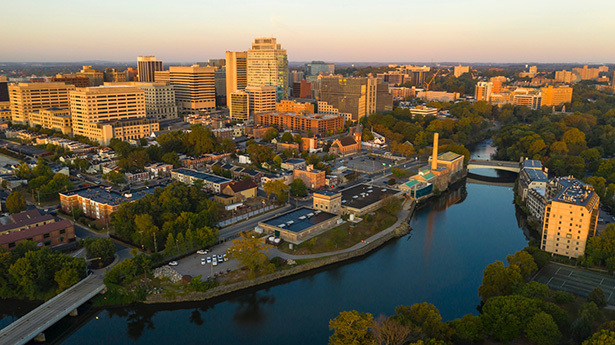
The 2000s were defined by investment in Wilmington and a shift to sharing Delaware business‑law know‑how online. As an anchor tenant at 500 Delaware Avenue, the firm helped open the city’s first new multi‑tenant office tower in many years. We also launched the Delaware Business Litigation Report, an early, durable resource for Delaware corporate and commercial decisions.

Milestones

  • 2005: The Delaware Business Litigation Report launches and begins archiving decisions and practice updates (archives show posts throughout 2005).
  • Dec. 2006: 500 Delaware Avenue (WSFS Bank Center) completes; Morris James is an anchor tenant in the 15‑story, ~371,000 SF tower.
  • Late 2000s: Formal eDiscovery capabilities are built around Delaware practice and local‑counsel workflows for national matters.
2010s
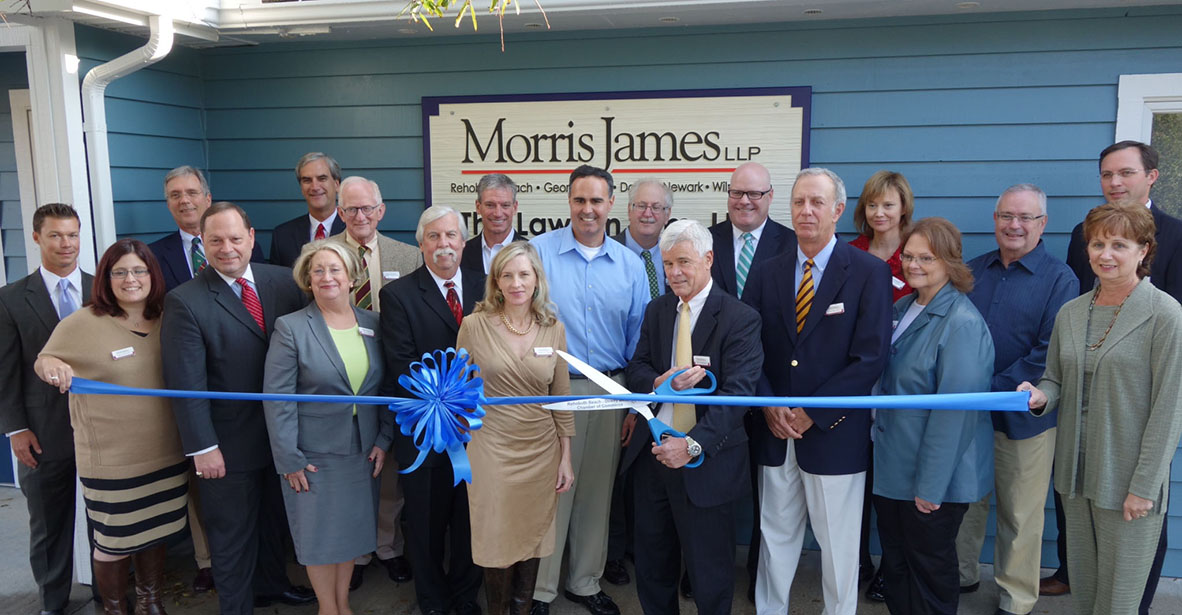
Lawyers at a Ribbon Cutting Ceremony in Rehoboth Beach

Statewide Footprint and Bench Strength

The 2010s broadened our geographic and practice footprint. A 2013 combination with Sussex County firm Wilson Halbrook & Bayard anchored our presence in Georgetown and accelerated service across all three counties.

Milestones

  • 2010: Delaware Superior Court establishes the Complex Commercial Litigation Division (CCLD) to handle significant business disputes. Morris James attorneys were among the earliest to litigate in this forum, shaping its use in contract, governance, and commercial cases alongside the Court of Chancery.
  • 2013: Morris James and Wilson Halbrook & Bayard combine; the Georgetown office continues at 107 W. Market Street (initially operating as Morris James Wilson Halbrook & Bayard LLP). Five WHB directors join: Eugene H. Bayard, Clayton E. Bunting, Dennis L. Schrader, Robert G. Gibbs, and David C. Hutt.
  • 2013: Ribbon-cutting opens our Rehoboth Beach office, serving the coastal region with direct, local legal resources.
  • 2017: Szabo & Ellis join the firm; Cindy Szabo and Brian Ellis bring additional transactional, real estate, and estate planning depth—and their Rehoboth and Georgetown offices continue under the Morris James name.
  • 2018: Keith E. Donovan elected Managing Partner
  • 2018: Rehoboth operations relocate to the Lingo Building (19339 Coastal Highway, Suite 300) to accommodate growth and improve client experience.
2020s

Leadership, continuity, and focused growth

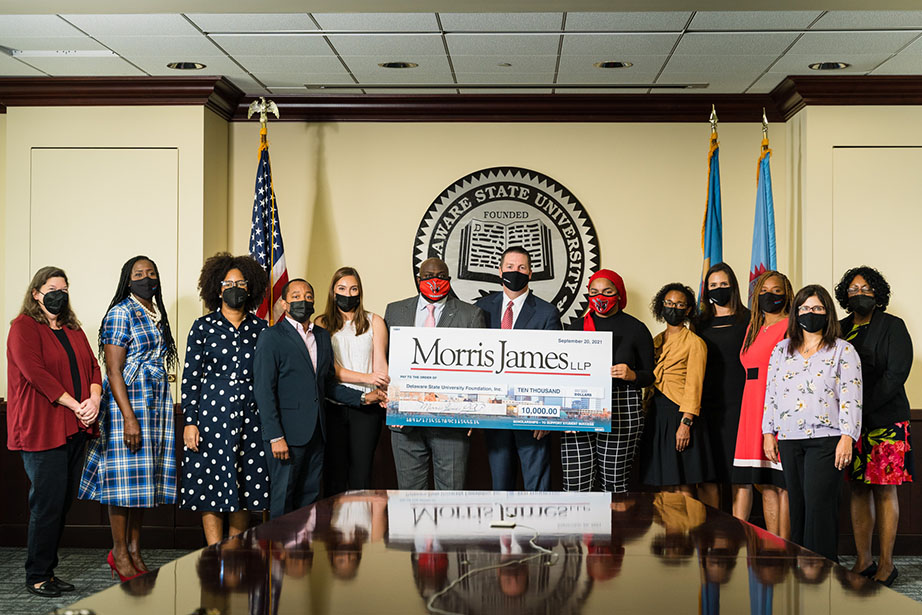
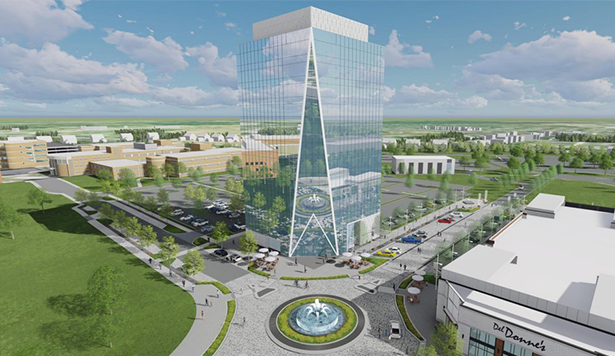
The 2020s have been marked by steady leadership and resilience. We navigated COVID-19 without interruption to client service, invested in our people and community, and grew in targeted practice areas. By mid-decade, we reshaped our Wilmington presence—relocating our headquarters to Avenue North while retaining a central business district office near the courthouses—creating flexible space that supports client meetings, collaboration, and hybrid work.

Milestones

2030s (Looking Ahead)

As Morris James approaches its 100th year in 2031, our focus remains clear: delivering service excellence to clients across Delaware and beyond. We will continue to expand strategically—growing capabilities in areas where Delaware law is decisive and where client needs are evolving, while maintaining the culture and teamwork that define us. Our core values of client focus, integrity, mutual respect, and collaboration will guide the next chapter, just as they have since 1931. The centennial will be a moment to honor that history and, more importantly, to shape the firm’s second century of service.