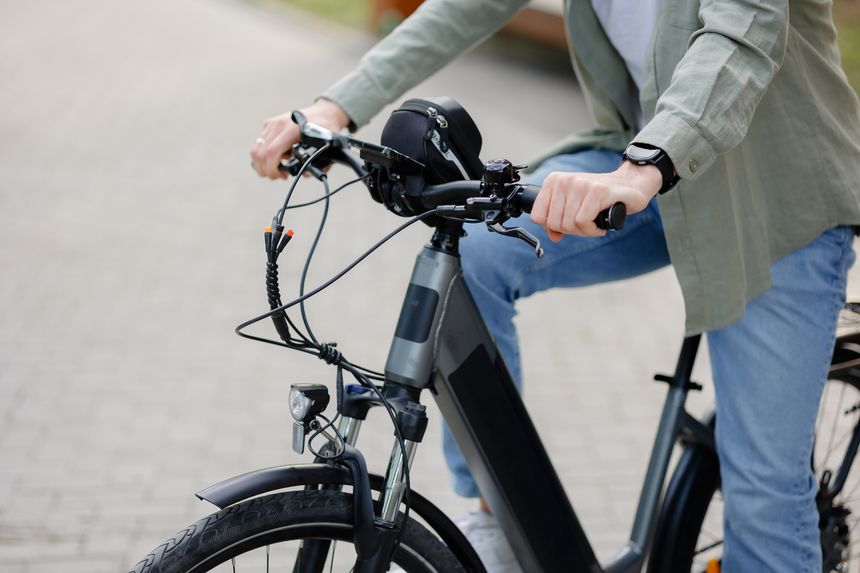
Electric bicycles, once a niche commuter option, are now one of the fastest-growing forms of personal transportation in the country. But as e-bike use rises, so do safety concerns. Across the U.S., policymakers are sounding alarms about the increase in serious injuries tied to e-bike accidents and the lack of clarity around how these devices should be regulated.
While much of the national attention has focused on dense urban areas, Delaware, and particularly Sussex County, faces its own version of this issue. Our roads, shoulders, and bike-lane systems were not built for the level of mixed-use traffic we’re seeing today. The infrastructure has not caught up with the influx of new residents.
Here’s a clear breakdown of how Delaware law treats e-bikes today and what riders should know before getting on the road.
Under Delaware law, most e-bikes are treated the same as standard bicycles.
To qualify as an e-bike, not a moped or motorcycle, the bicycle must:
Have fully operable pedals
Have a motor under 750 watts
Not exceed 20 mph on motor power alone
If those criteria are met, riders have the same rights and responsibilities as bicyclists. That means they can ride:
On most public roads
In bike lanes
On pathways where bicycles are permitted
No special license, registration, or insurance is required.
If the motor allows speeds above 20 mph or the pedals are not the primary means of propulsion, the vehicle may be classified differently under Delaware law.
That difference matters for liability, insurance, and where the vehicle is legally allowed to operate.
Even as “bicycles,” e-bikes are restricted in certain areas for safety reasons, including:
Sidewalks in business districts
Any place where local signage prohibits electric-assist devices
Local municipalities may also set stricter rules, and riders are responsible for knowing those limits.
Delaware requires helmets for riders under age 18 on bicycles and e-bikes.
For adults, helmets are strongly recommended, especially given the higher speeds and heavier frames of electric bicycles.
Some faster models on the market resemble small motorcycles, even though they are sold as “e-bikes.” In Delaware:
| Vehicle Type | Top Assisted Speed | License/Registration | Where You Can Ride |
|---|---|---|---|
| E-Bike (legal class) | ≤20 mph | Not required | Roads/bike lanes |
| Moped | Up to ~30 mph | Required | Roadways only (no bike lanes) |
| Motor Scooter | >30 mph | Required | Roadways only |
An incorrectly classified vehicle can lead to:
Insurance coverage disputes
Tickets or violations
Complications with injury claims if a crash occurs
If the vehicle goes faster than 20 mph on motor power alone, it’s not an e-bike under Delaware law.
Even when operating legally, riders are responsible for:
Following all traffic laws
Riding with the flow of traffic
Using lights and reflectors at night
Signaling turns
Yielding to pedestrians
Cars must also respect riders; e-bike users have the same right to the road as cyclists.
If you’re injured while riding an e-bike, the classification of your vehicle can affect:
Fault determination
Insurance coverage
Claims against a driver or municipality
Your right to compensation
That’s why it’s important to speak with a lawyer who understands how Delaware law applies to electric-assist bicycles.
Our attorneys represent injured bicyclists and e-bike riders throughout Delaware. We can help you understand your rights, evaluate responsibility, and pursue the compensation you deserve after a crash, whether involving a car, a property hazard, or a regulatory issue. If you have questions about pedestrian, bicycle and e-bike accidents, contact us online or call us at 302.655.2599 to learn more.
As e-bike use rises, so do safety concerns. Sussex County, faces its own version of this issue. Our roads, shoulders, and bike-lane systems were not built for the level of mixed-use traffic we’re seeing today. The infrastructure has not caught up with the influx of new residents.