blog

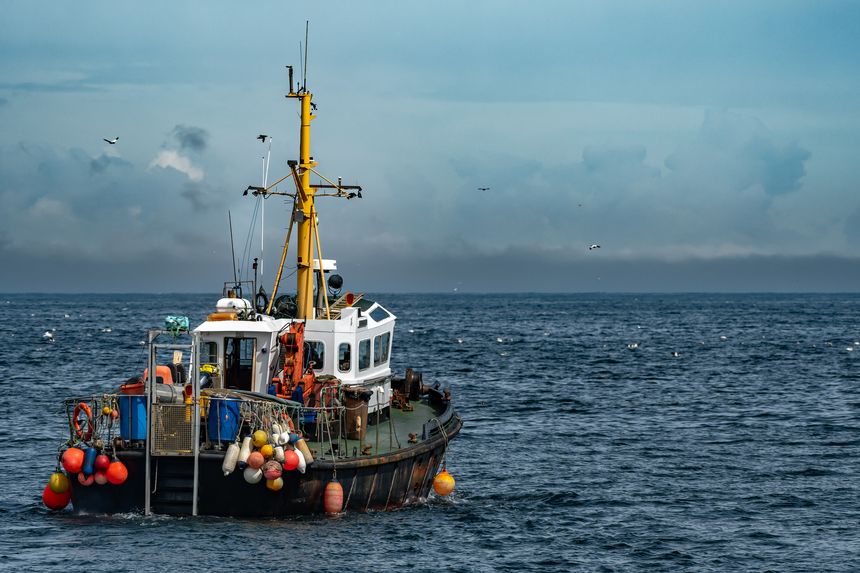
A recent report involving a missing New Jersey fisherman in the Delaware Bay highlights not only the risks associated with working on the water, but also the multifaceted legal framework that applies when a maritime incident results in a disappearance.
According to reports, the fisherman failed to return from a trip on the bay, prompting search efforts and ongoing concern from family members. As in many maritime cases, the absence of clear facts at the outset creates both investigative challenges and legal uncertainty.
Those cases often turn less on what is immediately known and more on what can ultimately be proven.
Threshold Question: What Type of Worker Was Involved?
One of the first legal concerns in any maritime incident is the classification of the individual.
If the missing fisherman was working as part of a commercial operation and qualifies as a "seaman," the case may fall under the Jones Act, a federal statute that allows injured maritime workers (or their families) to pursue claims against their employer for negligence.
That is a critical distinction.
Unlike traditional workers' compensation systems, the Jones Act:
If the individual was not a Jones Act seaman, other frameworks may apply—including general maritime law or, in some cases, state-based workers' compensation.
Getting that classification right is often the starting point and frequently contested.
How Workers' Compensation May (or May Not) Apply
In some maritime-adjacent roles, workers' compensation, or federal analogs such as the Longshore and Harbor Workers' Compensation Act (LHWCA), may apply.
Those systems function similarly to traditional workers' compensation:
But many offshore fishing operations fall outside those frameworks. For example:
As a result, families sometimes assume workers' compensation will apply—when, in fact, it may not be available or may not be the primary avenue of recovery.
Potential Claims Under Maritime Law
Where a maritime framework applies, several potential claims may come into play, depending on the facts:
Jones Act Negligence
If the worker qualifies as a seaman, the employer may be liable for failing to provide a reasonably safe place to work. This can include:
Unseaworthiness (General Maritime Law)
Separate from negligence, vessel owners have an obligation to ensure the vessel is "seaworthy." A failure in equipment, crew competence, or vessel condition can create liability even in the absence of traditional negligence.
Wrongful Death Claims
If the individual is ultimately presumed deceased, claims may arise under:
These claims are often limited to economic losses in certain circumstances, which can significantly affect recovery.
The Role of Third-Party Liability
Even where employer-based claims are limited or disputed, maritime cases often involve third-party exposure.
That may include:
In those cases, traditional personal injury principles apply, and recovery may extend beyond the limits imposed by maritime-specific statutes.
Why Early Investigation is Crucial in Maritime Cases
Maritime disappearance cases are rarely resolved based on a single issue. Instead, they require the reconstruction of events using limited, often technical evidence.
That may include:
In many cases, the legal outcome depends on whether that evidence can establish a coherent explanation of what occurred—and whether that explanation points to fault.
Key Takeaways
When a worker goes missing at sea, the legal analysis is not straightforward.
The available claims, and the value of those claims, depend on a set of threshold questions:
Those issues are not always easily addressed, but they ultimately determine whether a family has a viable claim and what recovery may be available.
If you or someone you know has experienced a maritime accident, fill out our online contact form or call us at 302.655.2599 for a free consultation. Morris James has a longstanding history of successfully prosecuting Maritime cases and will continue to monitor this developing situation.
A crew member aboard the F/V Bon Secour was reported missing shortly after noon on Thursday, according to a U.S. Coast Guard spokesman...The oyster boat traveled near Gandy’s Beach in Cumberland County.