blog

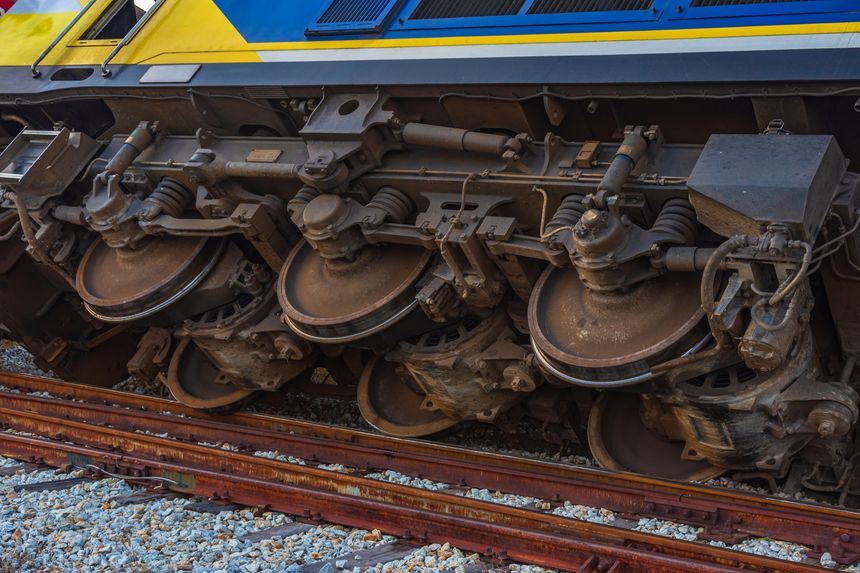
In January 2026, rail safety once again became global news when four separate train accidents occurred in Spain within a single week. One involved a commuter train striking a construction crane that had intruded onto the tracks. Another was a high-speed rail collision that killed more than 40 people. Each incident had different circumstances, but the pattern was familiar: safety systems failed, warnings were missed, and lives were forever changed.
For residents of Delaware and the greater Philadelphia region, these events feel uncomfortably close to home. Our community knows that rail tragedies are not confined to one country or one rail system. Whether it is a crane on the tracks in Spain or a derailment in Philadelphia, train accidents are rarely “acts of fate.” They are most often the result of preventable breakdowns in safety, oversight, and accountability.
On May 12, 2015, that reality struck our region with devastating force. Amtrak Train 188 derailed at Frankford Junction in Philadelphia while traveling more than twice the posted speed limit. Eight people were killed, and at least 185 passengers suffered injuries ranging from broken bones to traumatic brain injuries.
The National Transportation Safety Board later determined that the train entered a 50-mile-per-hour curve at approximately 106 miles per hour. The engineer experienced a loss of situational awareness, and the track had not yet been equipped with Positive Train Control (PTC), a safety system designed to automatically slow or stop a train before a dangerous situation occurs.
Much like the recent rail accidents in Spain, the Amtrak derailment revealed multiple missed opportunities to prevent loss of life. Communication failures, inadequate safety safeguards, and delayed implementation of available technology combined to produce a tragedy that should never have happened.
Train accidents involve massive, fast-moving equipment carrying dozens, or even hundreds, of people. The damage reaches far beyond the moment of impact.
Personal injuries are often severe. Survivors may suffer traumatic brain injuries caused by sudden impact or violent movement inside the rail car. Others experience complex fractures, crush injuries, spinal damage, or internal organ trauma that requires surgery and long-term medical care. Many are unable to return to work for months, or ever.
Equally significant is the emotional trauma. Survivors of mass-casualty rail accidents frequently develop anxiety, depression, and post-traumatic stress disorder (PTSD). These psychological injuries can affect relationships, employment, and overall quality of life long after physical wounds have healed.
For some families, however, there is no recovery, only loss. Wrongful death claims arise when a train accident takes a life, leaving spouses, children, and parents to cope with grief while facing sudden financial uncertainty. Funeral expenses, lost income, and the loss of guidance and companionship can place enormous strain on families already overwhelmed by tragedy.
There are other victims who don't always make the headlines: railroad workers. Engineers, conductors, and crew members are often among those killed or seriously injured in collisions and derailments. Their rights are governed by a federal law known as the Federal Employers’ Liability Act (FELA), which allows injured workers, or families of those killed, to pursue compensation when negligence led to their injuries.
One of the most important questions after a train accident is who failed to keep people safe.
Rail operators may be responsible if they did not properly train employees, enforce speed restrictions, maintain tracks and equipment, or implement safety systems like PTC in a timely manner.
Third parties are frequently involved as well. In Spain, construction activity reportedly allowed equipment to intrude onto active tracks. In the United States, outside contractors, maintenance companies, or equipment manufacturers may create hazardous conditions that lead to derailments or collisions.
Maintenance companies, rail manufacturers, employees, and others could also have legal liability after a train accident. These cases are legally complex because there are typically multiple vicitms, many potential defendants, and railroads operate under a combination of federal regulations and state personal injury laws. Determining how those laws apply, and how they affect personal injury or wrongful death claims, requires careful strategy and a thorough investigation.
After a serious rail accident, railroad companies move quickly to restore service. Wreckage is removed, tracks are repaired, and operations resume. While this may appear efficient, it can also result in critical evidence being altered or lost.
Our attorneys can take immediate steps to preserve key evidence, including event recorder data, maintenance logs, video footage, and internal communications. This information is often essential to proving negligence.
It is also important to understand that while the NTSB investigates the cause of an accident, it does not represent injured passengers or grieving families. The agency does not pursue compensation for medical bills, lost income, or wrongful death damages. That responsibility falls to an advocate focused solely on protecting victims and their families.
From Philadelphia in 2015 to the four rail accidents reported in Spain in 2026, the lesson is clear: when safety is delayed or ignored, people pay the price. These are not unavoidable disasters. They are warnings—often repeated—that meaningful safety measures matter.
If you were injured in a train accident, or if you lost a loved one due to a preventable rail incident, you do not have to face the legal process alone. Delaware law allows injured individuals and families to seek compensation. Time limits apply, so early action is critical.
Our attorneys represent passengers, workers, and families harmed by train accidents. We offer free, confidential consultations and handle cases on a contingency fee basis, meaning there is no legal fee unless compensation is recovered. To speak with us about your situation, call 302.655.2599 or contact us online. Taking that simple step comes with no obligation and can help protect your rights and your family’s future.
It is also important to understand that while the NTSB investigates the cause of an accident, it does not represent injured passengers or grieving families.


